Why Grandma's Cooking Tastes Better: What Science Says
It's not your imagination. Seven measurable reasons — and the last one is the sweetest.
It's not your imagination. Seven measurable reasons — and the last one is the sweetest.
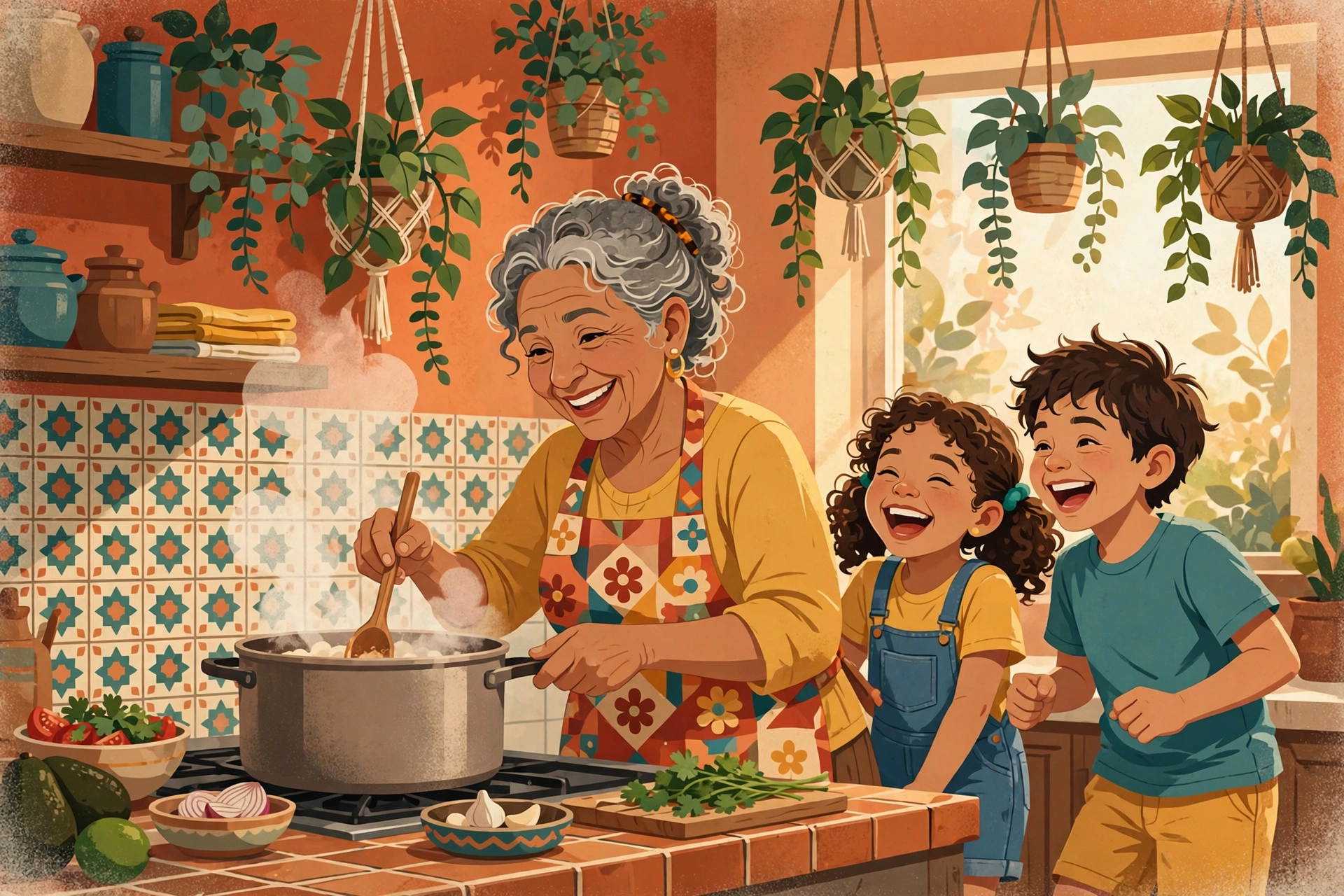
Original Curioso Latino illustration.
Ask any Latino what the best food in the world is and the answer is unanimous: grandma's. Exaggerated nostalgia? Partly. But science found very real reasons behind the phenomenon.
Grandmas cook slowly: hours-long broths, unhurried sofritos. Prolonged cooking develops glutamate — the famous "umami" — the fifth taste the brain registers as deeply satisfying.
Smell connects straight to the limbic system, the zone of emotions and memory. Your grandma's sofrito doesn't just smell great: it transports you to age 8 in milliseconds, and the brain rewards that trip with pleasure.
At grandma's, nobody eats standing up or watching the clock. Eating slowly and in company improves flavor perception: the brain has time to register every bite.
She's made that soup two hundred times. Repetition unconsciously fine-tunes proportions to a point no chef with a stopwatch replicates: it's accumulated mastery, not mysterious talent.
Grandma's cooking rarely uses ultra-processed foods: they're recognizable, market-bought ingredients. Fewer additives and more base flavor means the palate doesn't compete with chemicals.
Taste psychology studies show that knowing who cooked — and with what intention — changes flavor perception. Affection isn't a metaphorical ingredient: it's a real enhancer.
And here's the sweetest reason: every bite comes with years of happy memories attached. No restaurant in the world can serve you your childhood on a plate. Grandma can.
Call your grandma. And if you can, ask for the recipe — but accept it'll never taste the same: you'll be missing ingredient #7.
For those stews that ask for time and love.
Reviewed by the Curioso Latino editorial team. Original content for entertainment and general knowledge.