12 Things Your Brain Does Without You Noticing
Your brain edits memories, invents sounds and decides before you do. This isn't science fiction: it's your average Tuesday.
Your brain edits memories, invents sounds and decides before you do. This isn't science fiction: it's your average Tuesday.
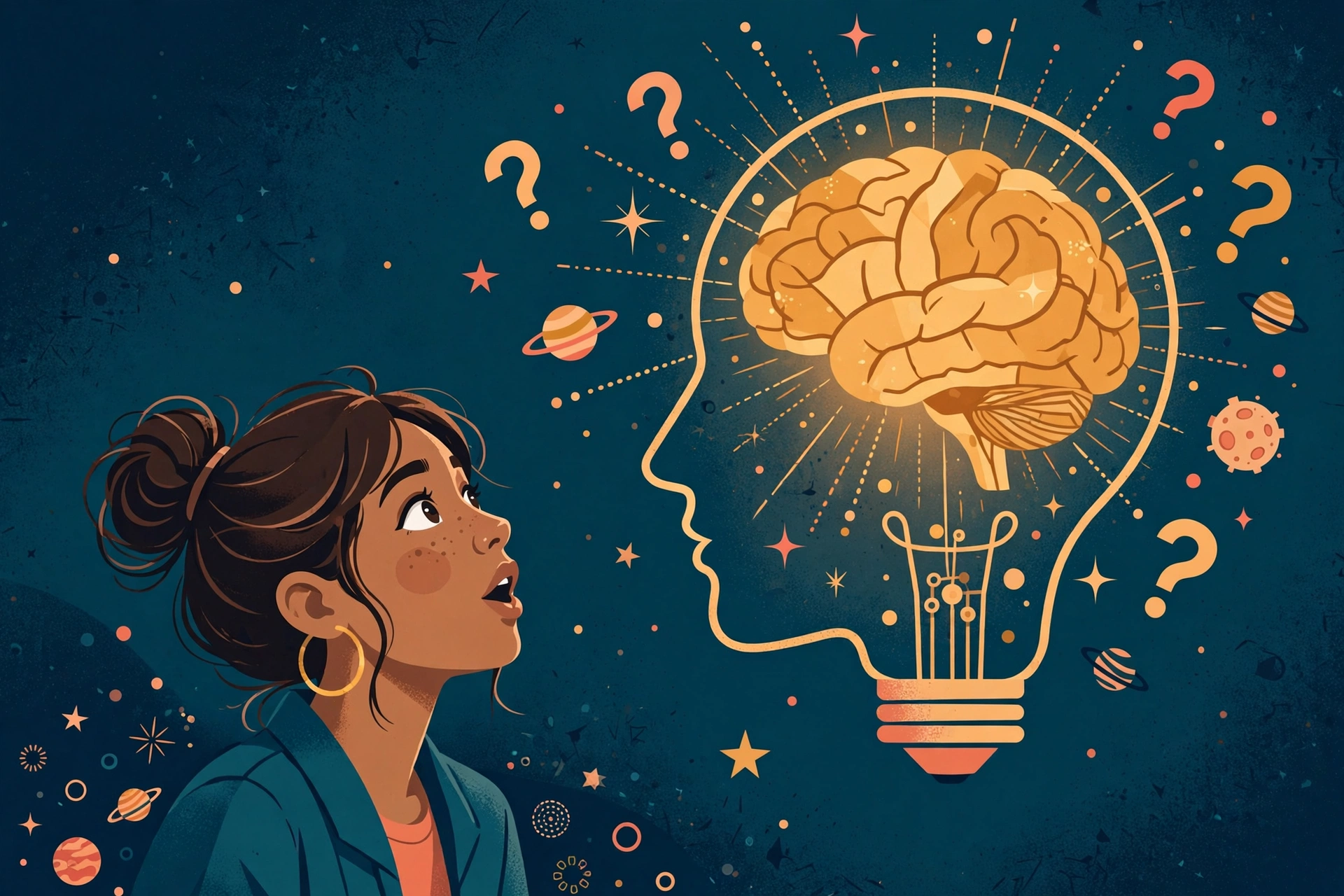
Original Curioso Latino illustration.
As you read this sentence, your brain is doing dozens of things you have no idea about. It's not magic: it's an organ that has spent millions of years optimizing itself to run on autopilot. These are 12 of its secret moves.
You walk into the kitchen and forget why you came. It's not distraction: when you cross a doorway, your brain files away the previous "chapter" and opens a new one, and sometimes the errand gets left in the old chapter. Retrace your steps: the memory is usually waiting at the door.
Your eyes don't glide: they jump in lightning-fast movements and your brain fills in the gaps. That's why you can read texts with scrambled letters as long as the first and last ones are in place.
Research suggests the human sense of smell can discriminate more than a trillion aromas. Your nose is a chemistry lab that works for free all day.
The brain activity tied to a choice appears fractions of a second before you feel you decided. Your conscious "self" arrives a little late to its own decisions.
The organ that processes all your pain has no pain receptors of its own. That's why neurosurgeons can operate with the patient awake and chatting.
Remembering isn't playing a video: it's rebuilding a scene, and each rebuild can change small details. Your sharpest childhood memory probably has touch-ups you'd never suspect.
It's the famous "cocktail party effect": at a noisy party you ignore everything… except your name spoken across the room. Your brain always keeps an ear on guard for what matters to you.
When you do nothing, your brain doesn't switch off: it activates a network that replays the past, imagines the future and rehearses conversations. You spend almost half the day in that creative autopilot.
That "I've lived this before" feeling would be, according to a widely accepted theory, your memory verifying data: it detects a resemblance to something earlier and raises the alarm even without finding the exact memory.
The electrical signals of your neurons add up to about 20 watts: enough to light a dim bulb. Literally, you're having bright ideas all day long.
During deep sleep, the brain decides which memories to keep long-term and which to drop. Sleeping well after learning something isn't pretty advice: it's part of learning.
That inner voice you read and think with uses the same brain areas as speaking out loud, only in silence. That's why reading quietly helps you focus: you're giving the system backup.
Your brain is the most complex organ we know… and you wear it with no instruction manual.
Note: this article is general-knowledge content, not medical advice. If you have health concerns, consult a professional.
Little helpers for better sleep, jotting ideas and exercising curiosity.
Total darkness = deep sleep = a brain that consolidates memories (see #11).
View on AmazonYour brain generates brilliant ideas daily: catch them before it edits them out.
View on AmazonReviewed by the Curioso Latino editorial team. Original content for entertainment and general knowledge.